Local Creatives on the Rise
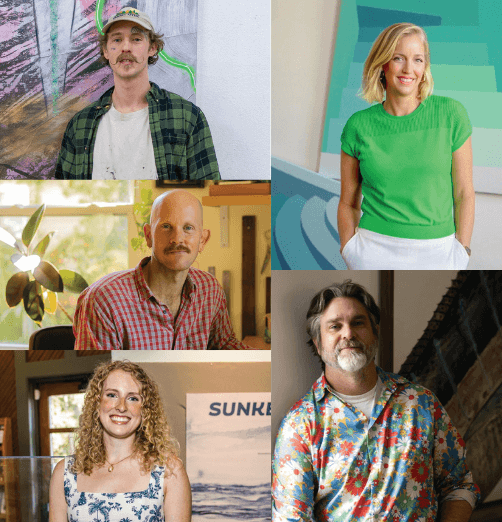
Pensacola’s art scene isn’t shy—you just have to know where to look. Our city is a vibrant hub for galleries, art shows and artist studios, each showcasing a diverse mix of talent and styles waiting to be discovered. Pensacola’s art scene is too vast to cover in just a few pages, but a few local artists stand out for their unique visions spanning multi-dimensional forms like bronze sculpture and sunken ship-inspired ceramics to painted canvas exhibiting a distinctive presence and message. Pensacola Magazine spoke with five local artists to watch who embrace a variety of mediums and push creative boundaries, and below we offer a glimpse at each artist’s background, their creative process and the inspiration behind their work.
 Photo by SB Visuals
RYAN MAYALL
Presence in Play
Ryan Mayall is a self-taught artist whose journey into the art world began with poetry, but he ventured into another outlet of artistic expression with abstract painting in 2016. He was intrigued by a friend’s painting and the way it lent itself to interpretation and imagination. In turn, what began as an experiment with craft paint and repurposed canvas led to a career in fine art creation and exploring spiritual themes and cathartic release through contemporary abstract expressionist painting.
“In the beginning it was a cathartic release and gave my inner child space to express and feel safe to do so without judgement,” Mayall said. “It’s developed into self-realization like a spiritual practice: I call it presence in play.”
 Photo by SB Visuals
There’s no denying spiritual themes in Mayall’s artwork with recurring motifs like the golden orb and butterflies, symbols of the spirit and transformation. Of course, interpretation varies from viewer to viewer and his goal is to pull a powerful feeling from the viewer: a feeling that captures the viewer’s attention and creates a present moment in a world swept up in the fast pace of digital devices in which we slide from one story to the next and there’s something new every millisecond.
When creating his abstract art, Mayall usually begins by having a handful of colors in mind that he wants to use. Mayall makes his own brushes from wood and repurposing house painting brushes into varying degrees of vertical brushes, ranging from soft to hard bristles. He turns on music, feels an emotion and uses his handmade brushes to start with slow movements until the desired motion is achieved. Inspired by Bob Ross and the idea of “happy accidents,” he welcomes experimentation, often turning chaos and the occasional “mistake” into something beautiful and uniquely his own. Sometimes this means incorporating items like snake skin and plant leaves into his painting, leaning into the concept of transformation.
“I love the unpredictability and chaos of it,” Mayall said. “It gives me the opportunity to be present rather than sitting there overthinking calculations in my head on a design.”
 Photo by SB Visuals
Mayall’s method usually consists of mono-printing: creating by removing paint from an inked surface to achieve unique textures and painterly effects, making each impression distinct. He starts layering black paint directly on his studio wall and later presses a canvas up to the paint to create an impression and get the initial layer of the painting down. After that, he goes back and forth between layers, pulling old layers to the front and adding new layers. It’s a process of building layer upon layer.
While seeing other artists fulfill their passions continues to inspire Mayall, it was important for him to have his own space to focus on his work and the message he aims to convey. For that reason he opened his own studio, Ryan Mayall Fine Art Galleries and Studios. To see more of Mayall’s art, you can visit his gallery at 2403 W. Cervantes St. or website ryanmayall.com.
 Photo by SB Visuals
SARAH SOULE WEBB
Making Waves with Surreal Waterscapes
There’s an artist making waves in our city with her surreal waterscapes: Sarah Soule Webb is a Pensacola native who became serious about pursuing art full time around 15 years ago when she decided to leave behind her career as a registered dietitian. Though life led her to Birmingham, Ala. for a decade and a half, the waters of her Pensacola hometown remained her muse and continue to inspire the waterscapes and underwater portraiture that underline her work.
“When I was in Birmingham, I longed for the water,” Webb said. “Growing up in Pensacola never leaves you.”
Webb’s process involves painting wild, loose, colorful backgrounds that lends her art a surrealistic hand. She saves white or the lightest color in a composition for last, adding a pop of light that really brings her art to life. Webb creates many layers using acrylic washes, acrylics being a favorite of hers because of how quickly they dry and their flexibility of use, since acrylics can resemble water colors or oils depending on what additives are used.
 Photo by SB Visuals
Her new studio on Palafox Street held its grand opening November 2025, and serves as both her own space for creating and as a gallery for other local artists. In line with building community and support for fellow artists, Webb has a long list of featured artists coming into her gallery this year, who she looks forward to promoting and having special events to highlight some new talent. Currently, Webb’s gallery features the coastal-inspired woodwork of Pete Davidson, black and grey realism art by Loren Miller as well as prints by Kelly Whibbs Art.
“Being a full-time artist can be very isolating,” Webb said. “I had been on the lookout for a more elevated space that doubled as a gallery, one that I could also represent other artists. I never imagined how much fun I’d have creating work in the morning and then opening up the doors for visitors. I just love the short and long visits of new and old friends.”
 Photo by SB Visuals
Outside her studio on Palafox Street, Webb recently utilized the Reimagine Palafox renovation fencing to hang up three large canvases for a triptych that will be heading to a Boca Raton hospital. While her studio space would not have allowed her to paint all three in a row, once realizing she had wall space outside she improvised and took her art to the streets: painting outside, meeting with people and jamming to street musicians while finishing up the big project.
Her large-scale work has been showcased in some highly visible and exciting places from The Mayo Clinic in South Florida, The Four Seasons in Naples, The Alamite Hotel in Tuscaloosa, and Baptist Hospital here in Pensacola.
Discover more on Sarah Soule Webb Studios by visiting her space at 126 Palafox Place, or follow her journey on social media @SarahSouleWebbStudios.
NATE SCHWEIGERT
Connection Through Nature-Inspired Art
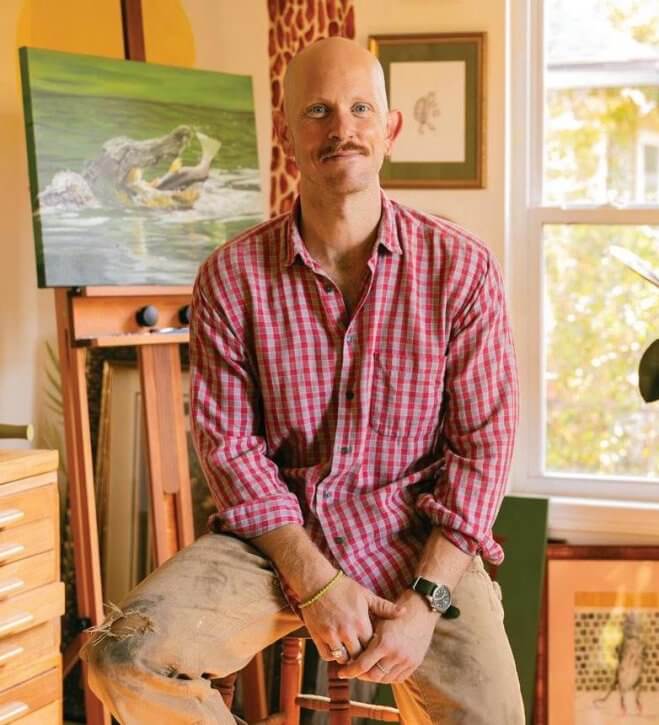
Nate Schweigert is a local queer artist and chaplain whose work combines nature and nurturing. Through his nature-inspired art and chaplaincy he aims to create a connection between others and allow a container where conversation can occur judgment-free. Although always an artist in one form or another throughout his life, Schweigert began seriously pursuing art as an outlet and potential for further expression in his mid-to-late 20s. From tour guide in Alaska to living in China for a year, which allowed him to experience different perspectives and other languages, Schweigert has had an opportunity to explore the world and find ways to keep his artistic visions alive.
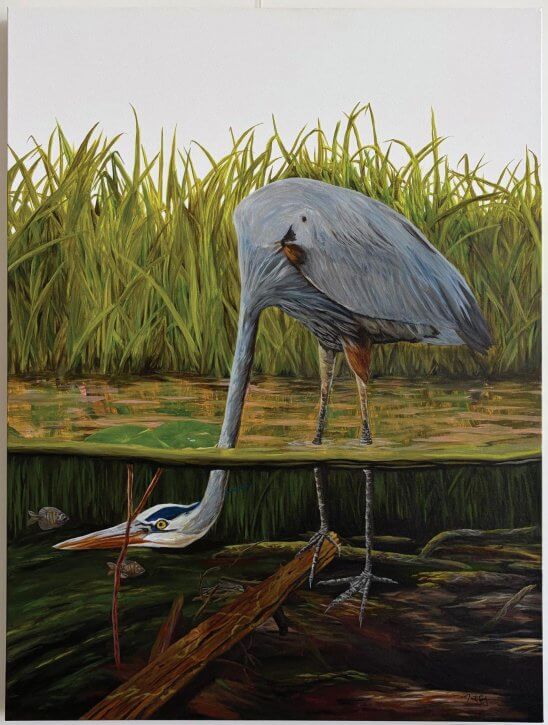
Although painting has been a staple for his business in art, Schweigert enjoys other artistic avenues like landscaping, interior design and decorating. Nature is a constant source of inspiration for Schweigert, from the owls that move over his home in the winter to herons that meet him on his walks with his dog. For Schweigert, nature represents a theme of connection in his artwork: the idea that everything and everyone belongs. But art is just one way Schweigert aims to create a connection to others, as he also serves as a local chaplain.
“A chaplain is someone who comes alongside you in your story,” Schwegiert said. “Not imposing their own solutions but listening for keys and threads that you already have within you. The central theme for my art and being a chaplain is creating space to ask questions, explore narratives and have a conversation.”
While nature provides inspiration to Schweigert’s works, he also finds a source of inspiration in a person he never met but knows well through a shared artistic expression: his late uncle. His uncle’s art supplies were passed down to Schweigert, and he still has pieces of his uncle’s art in his home. One of the most notable pieces is of an alligator reclining by a pool with a magazine, a theme of anthropomorphism or animals with human characteristics that Schweigert continues to play with in his own artwork.
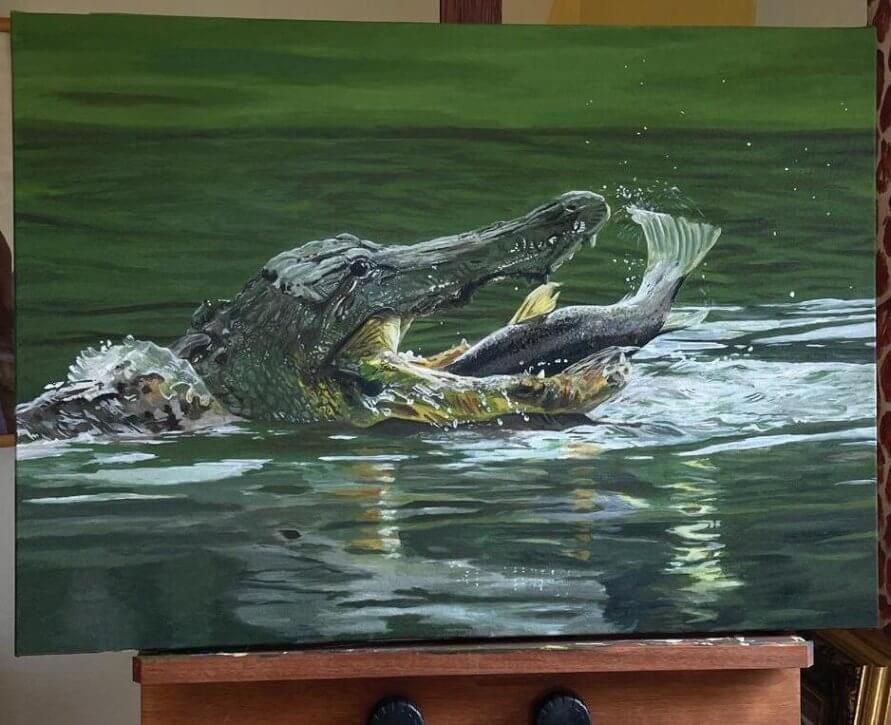
“My style is playful and whimsical but also deep and curious,” Schweigert said. “I think in one piece you may see contemplation, and in another piece you may see sass. I would hope it captures the fullness of human emotion and feeling, mostly through the natural world.”
Schweigert recently opened Studio 321, his own gallery and studio in East Hill located in the Old Sacred Heart Hospital. His goal is to have a handful of new original canvas pieces by March 21, when he will host an unveiling event. Aside from his studio, Blue Moon Antique Mall and Golden Hour Teahouse are a few public venues where you can find Schweigert’s original artworks and framed prints. Learn more about Schweigert’s art and upcoming events by following him on Instagram @nate.geo or visiting nategeo.co.
DREW REHWINKEL
A Second Chance Through Art
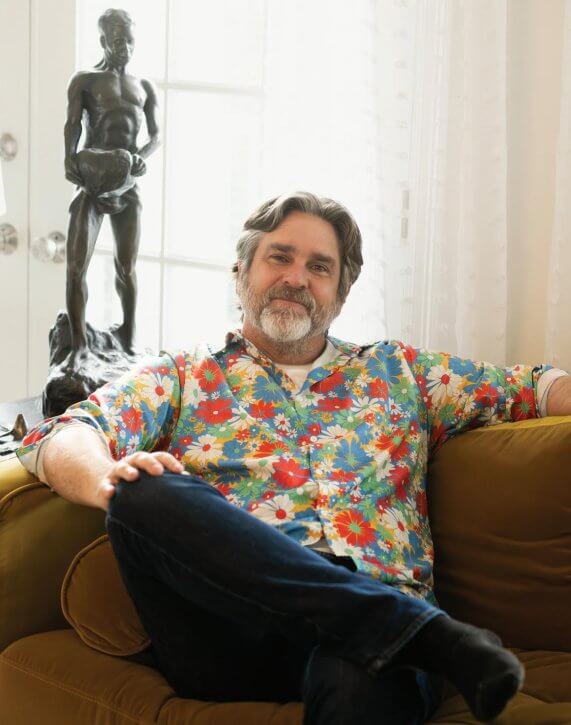
Drew Rehwinkel is a Yale graduate and teacher turned sculptor. Rehwinkel began sculpting 10 years ago, when he looked to art to help guide him out of a mentally and physically tolling time. Rehwinkel delved into the art of sculpture with beginner classes at First City Art Center (FCAC), which evolved into utilizing college-level resources at the University of West Florida and Pensacola State College (PSC) with mentors like Sam Nettles (FCAC) and Jimmy Rhea (PSC) impacting his mold-making and foundry arts skills so he could fully realize his dream of becoming a bronze sculptor.
“It was embracing my passion for art that gave me the courage to use this second chance, if you will, to work through my mental health challenges,” Rehwinkel said. “Thanks to art, my family, and advanced research in Treatment Resistant Depression, I feel reborn, rejuvenated and excited for the next step in my path.”
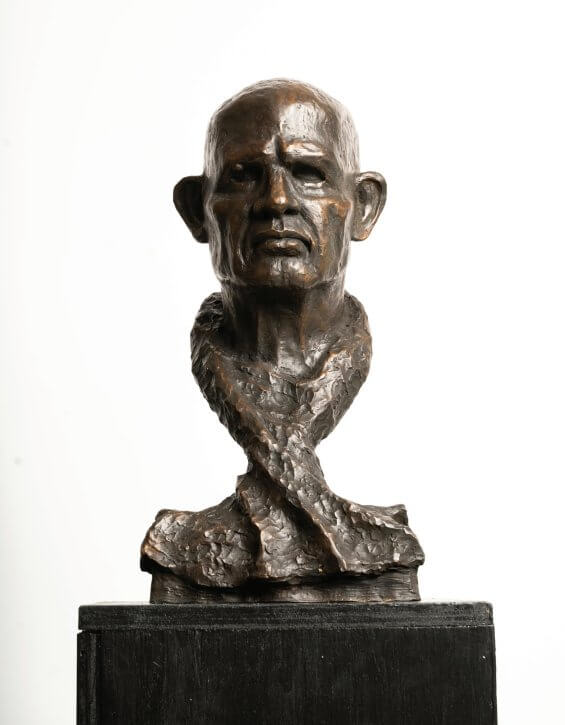
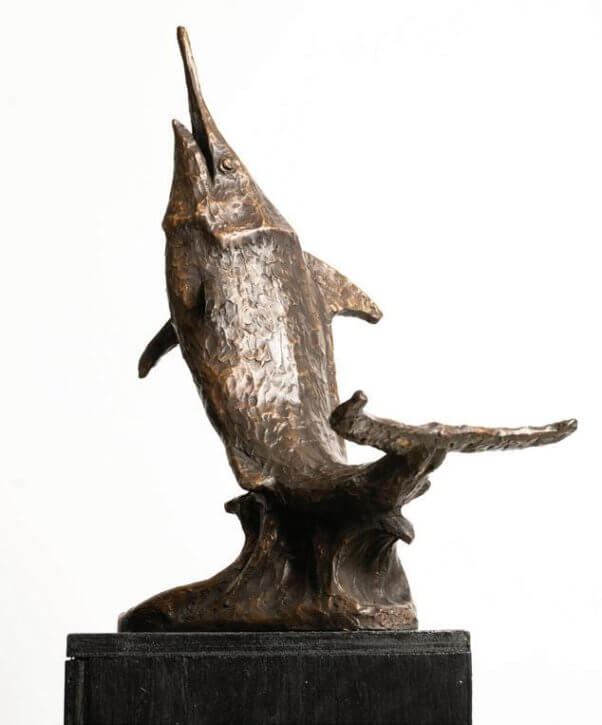
For Rehwinkel, bronze sculptures are time capsules capable of withstanding the harshest of elements and serve as symbols that will endure through time. Some of his current sculpting endeavors include making perceived low-value and waste objects into long-lasting materials preserved in bronze: banana peels, crumpled water bottles and Ramen noodles are just some pieces he is working on at the moment. Although bronze is a staple in his work, Rehwinkel is experimenting with a copper alloy called nordic gold–while it contains no actual gold it can be cast into shape and polished to a brilliant golden finish.
Like with many creators, Rehwinkel’s process starts with an idea or vision. He jots down notes or a rough draft on a sketchpad, where he evaluates the idea and determines if it is compelling enough to captivate a viewer. Once
the sculpting is complete, Rehwinkel makes a mold of rubber, silicone or plaster and casts a hollow version of his sculpture in wax. The wax copy is encased in a plaster and silica block then melted out in a kiln, leaving a void in the block into which the molten bronze can be poured. After pouring, the piece is sandblasted, chased with a grinder then a final patina is applied.
“I have come to believe that my role is to serve as a link between the past and the future,” Rehwinkel said. “Newer artists need to learn these time-honored skills, developed over thousands of years, before they are lost. By teaching sculpture, I hope to influence a new community of artists to embrace the qualities of bronze casting that means so much to me.”
Rehwinkel looks forward to teaching his own sculpture classes at BoBo Pottery Studio in Gulf Breeze. More of Rehwinkel’s work will be featured at his next solo show in May and June at Artel Gallery, where you will see numerous bronze sculptures, both large and small. To learn more about Rehwinkel’s upcoming events and view more of his work, visit drewtheartist.com and follow @DrewtheSculptor on Instagram.
JENNA ZYDLO
Art Entwined with History
Originally from Basor, Kan., Jenna Zydlo is a ceramics artist with dual interests in art and history—a combination that fueled the creation of her shipwreck-inspired exhibit, Sunken Series. Zydlo has always been driven by a deep curiosity about the world and the past: she was only 4 years old when she visited her first archaeological site and always wanted to watch the National Geographic channel instead of cartoons like SpongeBob. This interest bled into her art over the years, when she started to watercolor and acrylic paint using photos of archeological sites as references. For Zydlo, she realized archeology and art are deeply entwined in history, and their connection could be something she explored in her art. All this culminated in a path to earning her dual degree in studio art and anthropology from University of West Florida in 2025.
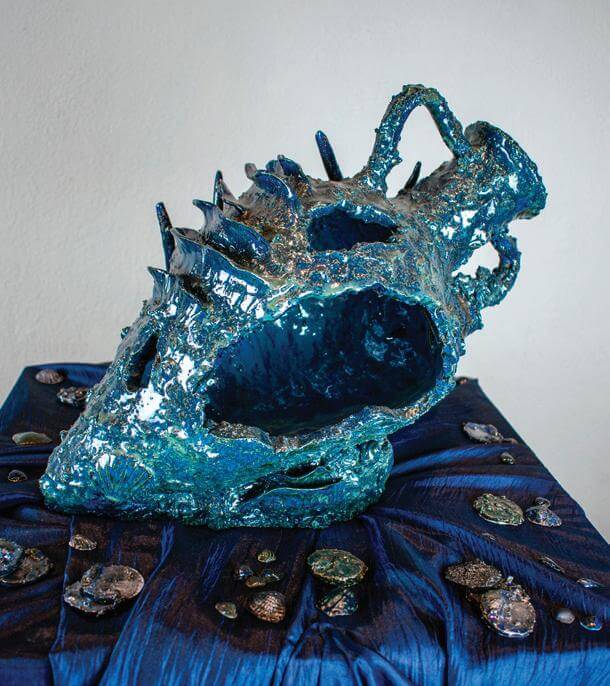
Zydlo’s desire to build the Sunken Series was inspired by her participation in the terrestrial and underwater excavation of the 16th-century Spanish colonial settlement site of Tristan de Luna in the summer of 2023. Her series does not copy but takes inspiration from what she learned during field school and other excavation opportunities, coupled with extensive research on the Tristan de Luna site and other early Spanish shipwrecks and sites in our area.
“I wanted to balance realism with inspiration,” Zydlo said. “I wanted all of my pieces to be realistic yet slightly fantastical to play into the story of the passage of time and what the symbols themselves represent.”
Zydlo’s Sunken Series exhibit is available to view at Florida Public Archeology Network’s Destination Archeology Resource Center and showcases three pieces: Silver Coins, Galleon and Storage Vessel. All of the pieces were hand-built with stoneware clay because of its versatility and durability.
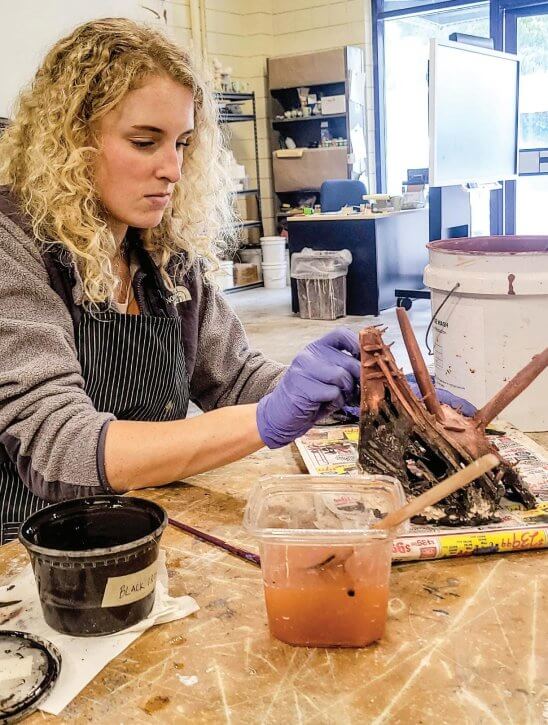
Zydlo even incorporated shells found at Pensacola Beach by making her own casts of the shells out of clay. Her process for making Silver Coins had an especially interesting tie to the past, as the process was very similar to how coins were historically minted: Zydlo carved out her own stamps for the coins out of clay, then fired and imprinted them on a slab.
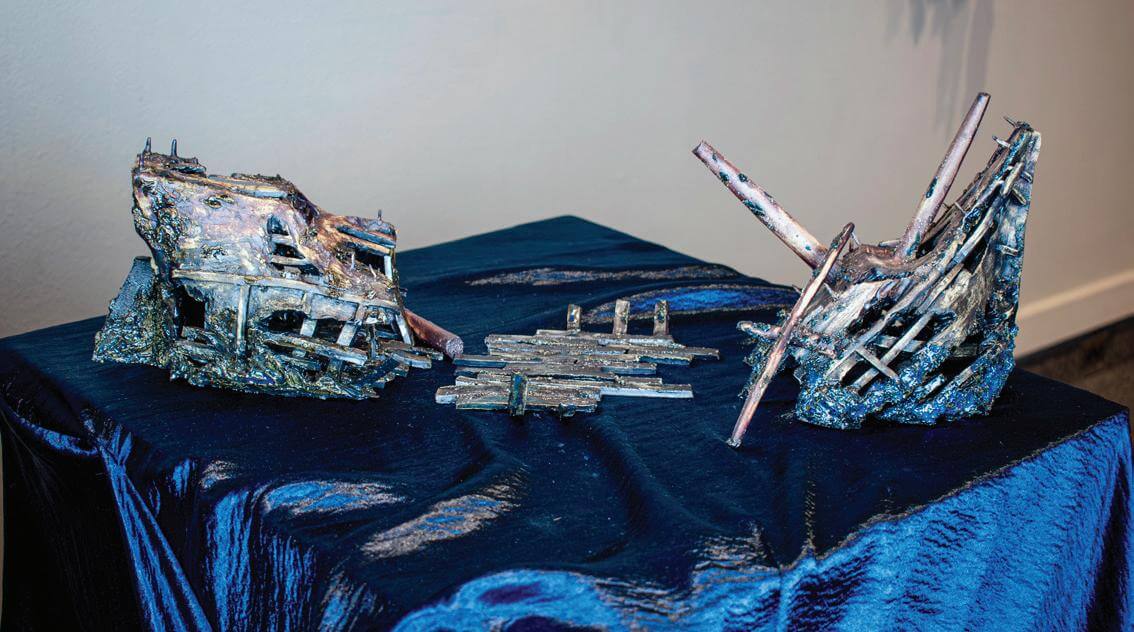
As for the glaze, Zydlo chose an uneven blue-green color for the dimension and because it was reminiscent of the reflection of light through dark water—furthering the illusion that all three pieces had been embedded in the sea floor for hundreds of years. To add a look of weathering and tarnish that appears on silver objects in real underwater shipwrecks, Zydlo used black and brown iron oxide on the ship, coins and shells.
“I would love to continue to expand on the intersection of anthropology and art,” Zydlo said. “Ideally, I’d love to make work inspired by the sites and cultures I get to see and experience.”
Looking to the future, Zydlo is searching for her own studio or to join a space where she can further explore her interests in art and history. To follow Zydlo on her journey, check out @zydlo.art on Instagram.