Ways to Live a Longer, Healthier Life
The human body isn’t a machine, but like anything that works hard, it can always benefit from a little care to keep everything running smoothly and functioning better for the long haul. Biohacking is one science-meets-lifestyle approach to optimizing the wellbeing of body and mind by making changes to one’s lifestyle and biology. All biohacking methods work by influencing the body on a cellular level to reduce the chances of disease and potentially increase lifespan.
Biohacking is a broad term for methods that range from simple changes—like personalizing meals and exercise routines—to using more complex approaches, such as using devices like hyperbaric oxygen chambers and supplementing with popular nootropics like L-theanine and Lion’s Mane, which help protect the brain from oxidative stress.
To understand biohacking better is to understand how it affects the body on the cellular level. Below the microscope, biohacking methods work to reduce oxidative stress by lowering the number of free radicals in the body by increasing the number of antioxidants to fight them, boost cellular energy (also called ATP, adenosine triphosphate) in mitochondria or the “power houses” of our cells, and even influence DNA by improving the length of telomeres (as shorter telomeres are linked to aging and disease).
Healthcare and wellness professionals often cite oxidative stress as one the biggest threats to our health and lifespan. While we cannot always escape the causes—ranging from inflammation and aging to external environmental factors like pollution and mental stress—we can combat the effects through biohacking. To effectively combat oxidative stress, many people combine biohacking methods. This means adopting wellness plans with clean diets low in processed foods, exercising and meditating to reduce stress, and using therapies like red light exposure to boost antioxidant production and mitochondrial health. While we will highlight a number of ways to introduce biohacking into your routine below, it’s best to research each method carefully and always consult with a medical professional before trying any new therapy, device or supplement.
Pensacola Magazine spoke with one local couple to discuss their unique biohacking journey, including what “hacks” they use, and how it has impacted their health and quality of life so far. We also consulted with local professionals offering self-optimization services, from infrared saunas and cold plunges to red light and NAD+ therapies, so anyone interested in elevating health can further explore the world of biohacking wellness.
A Journey Through Biohacking
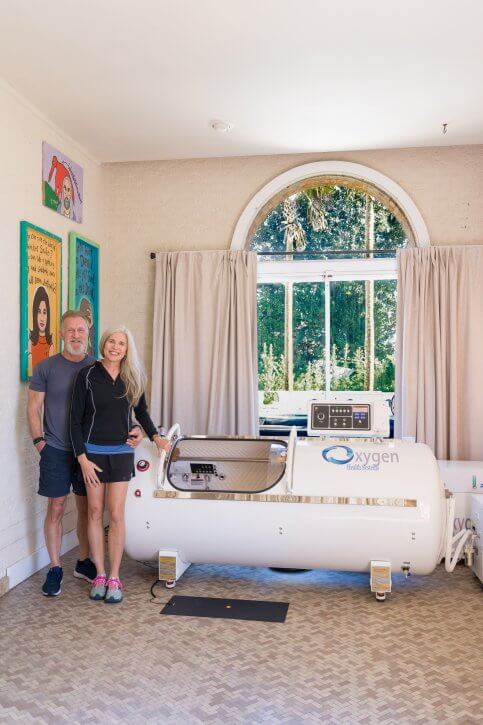
Adrian and Cheryl Russell are two Pensacola residents on a mission to live longer and improve their quality of life. One of the key factors in the couple’s plan was incorporating the use of hyperbaric oxygen therapy (HBOT). Adrian already had a very health-focused and active mindset, and this paired with Cheryl’s PhD in Human Capital Development and career studying human performance and reinvention, naturally made both curious about evidence-based methods for improving wellbeing. The pair decided to incorporate HBOT into their wellness plan after reading a 2020 study at the Shamir Medical Center in Israel, which showed that HBOT supports healthier aging, improves cognitive function and encourages cellular repair by improving the length of DNA’s telomeres and removing senescent cells. When they learned HBOT is used worldwide to support recovery, healing and healthy longevity, it aligned with their commitment to staying proactive about health.
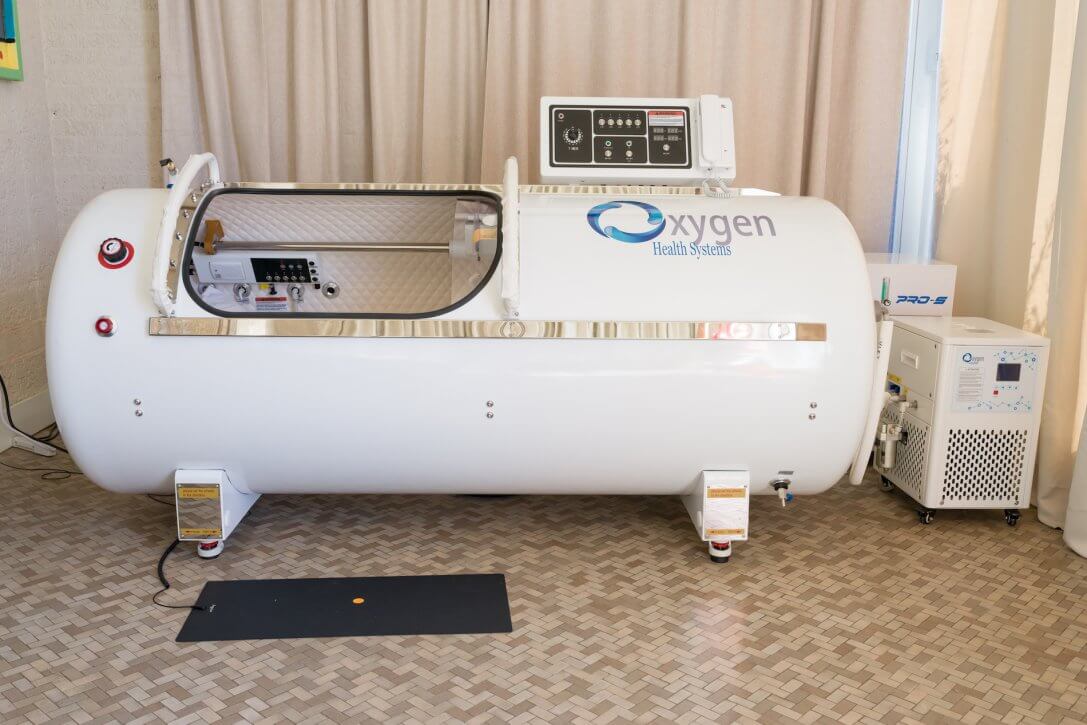
Although the chamber might seem a little daunting to think of climbing into at first, the potential anti-aging factors combined with physical and mental uplift benefits of HBOT appear well worth the climb. While a person’s typical intake is 21 percent oxygen just by breathing air, HBOT involves breathing in 100 percent oxygen at pressures well above typical atmospheric levels within a self-contained “soft” or “hard” chamber. Soft chambers are made from durable but flexible materials like nylon or neoprene to form an inflatable bag that seals with zippers, capable of going up to 1.3 ATA (atmospheres absolute). Hard chambers are constructed with high-strength steel and plexiglass, and go up to ranges of 2 to 3 ATA.
By increasing oxygen availability, HBOT can support cellular and tissue function as well as healthy regeneration in the brain and body. This is because increased oxygen allows for the formation of new blood vessels, an increase in stem cells, a reduction in inflammation, enhancements in antioxidant defense systems and prevention of aging cells.
The Russells first experimented with HBOT at Henry Chiropractic, one of the only locations in Pensacola to offer the therapy, where they determined their bodies could withstand the oxygen and pressure levels. It became apparent to the couple that meaningful results wouldn’t come from a single session, so to make the therapy more accessible and easy to incorporate into a weekly routine the Russells acquired a HBOT hard chamber to use at their home.
“The potential benefits extended well beyond one or two outcomes,” Russell said. “We decided to invest in our future healthspan by purchasing our own chamber so we could follow a structured protocol, track our progress and fully commit to the process.”
The couple use a hard shell chamber from Oxygen Health Systems paired with two oxygen concentrators to enhance oxygen delivery during each session. The hard chamber is capable of operating up to 2 ATA, which is the equivalent to being 33 feet under water. Pressure is a critical factor when discussing HBOT as many landmark clinical studies demonstrate significant therapeutic outcomes conducted at higher pressures often in the 2 to 3 ATA range. Although hard chambers are more commonly associated with clinical or hospital settings, the couple wanted a chamber capable of delivering higher ATAs for the benefits outlined in the Shamir Medical Center studies, which is only possible with a hard chamber.
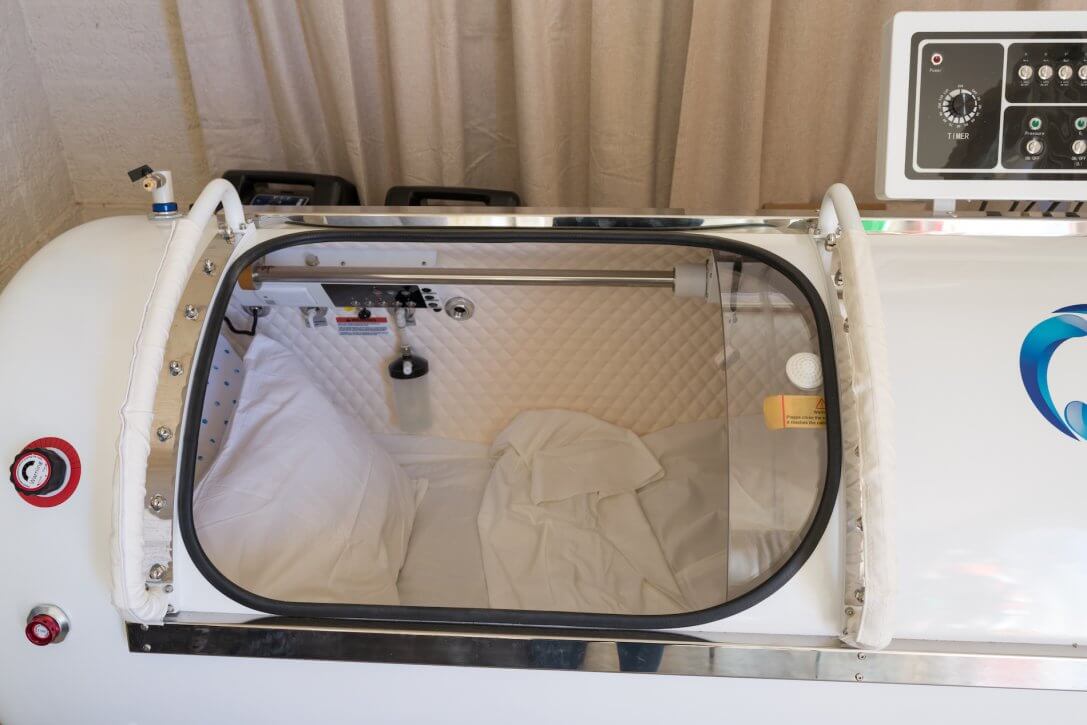
It’s important to note the safety precautions the Russells took in ensuring the chamber would be appropriate and safe for use in their home. Oxygen is highly flammable so the couple ran tests to ensure the chamber functioned properly and that no leaks were present, which can be dangerous if exposed to a spark. For this reason, electronics are also not recommended when using a chamber on the chance the device creates a spark.
The couple embarked on a 90-day protocol modeled after those used in the longevity and cognitive-aging research referenced in the Shamir Medical Center studies. During their 90-day protocol, sessions last about 60 to 90 minutes and the couple use the chamber five to six days per week. To prepare, the couple avoid oils, fragrances and other non-chamber-safe skincare products and hydrate beforehand.
After completing an initial three-month cycle, the Russells transitioned into a maintenance phase to sustain the benefits of HBOT. During maintenance, they reduce frequency to three to four sessions per week, changing to an hour per session. Although there is no universally established guideline on how many times per year a protocol should be repeated, clinicians and researchers commonly suggest one to two full cycles of 90 days per year, depending on individual goals, health status and response to therapy. Ongoing research continues to explore optimal frequency, which is why the pair approach this as a long-term, data informed journey rather than a one-time intervention.
The couple also took note of the subjective results: How did they feel after using HBOT regularly? After eight weeks, Cheryl says 45 minutes into a session now produces something she refers to as “chamber zen,” a clear and focused state where she’s able to access clearer thinking and faster processing.
For Adrian, the results were more physically noticeable benefits. After suffering for 3 years from a neck injury and considering spinal fusion surgery to remedy the pain, Adrian wanted to try a HBOT as a more non-invasive option to reduce his pain first. Now, his neck pain has reduced dramatically and he is able to enjoy a better quality of life.
Moreover, both cite how sleep has improved as their bodies have found a natural circadian rhythm and both feel more refreshed when waking up. The boost to energy levels also means no desire to reach for another cup of coffee to keep going through the day.
To determine HBOT’s effect on the cellular level, the couple underwent lab testing by True Diagnostic. They looked at biological age markers, inflammatory indicators and organ system level metrics using advanced epigenetic testing. After completing the 90-day protocol of HBOT, lab values did not improve in a linear way and a few categories actually appeared worse. However, after reviewing the results with clinicians and examining the broader context, several important factors could have an effect on the results: timing of the blood draw, recent physical stress and travel, temporary physiological repair responses and even changes in lab algorithms can all influence epigenetic and inflammatory markers. What did improve or remain stable were the pace of aging metrics and functional improvements they experienced subjectively. In fact, Cheryl’s cellular age appeared 10 years younger than she is. At this stage in the couple’s HBOT journey, the labs don’t suggest that HBOT was ineffective but reinforce the idea that advanced labs reflect a dynamic biological process but do not provide a final verdict. For the couple, the mental and physical results they feel are a huge testament to the efficacy of HBOT.
“Hyperbaric oxygen therapy has become more than just a protocol for us,” the Russells said. “It’s a key part of how we’re designing a healthier, more intentional next chapter. And honestly, this is just the tip of the iceberg.”
In addition to HBOT, the couple also incorporate other methods into their wellness plan. They lift weights and walk five to six times a week, and follow a Pescatarian diet rich with fish, legumes, fruits and vegetables for the benefits of improved heart and brain health, better weight management and disease reduction. They are also considering alternative ways to biohack, including experimenting with red light therapy using medical-grade LED panels next.
For readers interested in learning more about the couple’s journey and the day-to-day reality of using a chamber at home, check out Dr. Cheryl Russell—Fearless After Fifty on YouTube to follow their documented adventure.
Hot and Cold Therapy: Infrared Saunas and Cold Plunges
As the Russells mention, HBOT is just the tip of the iceberg when it comes to biohacking or optimizing health. Beyond HBOT and simple changes like integrating a healthy diet and exercise, perhaps a more approachable way to enter the world of biohacking is to first experiment with hot and cold therapies with options like infrared saunas and cold plunges.
Hot and cold therapies can provide pain relief, reduce inflammation and speed recovery–all of which can be made even more effective by combining the two for overall healing and mobility in what is called contrast therapy. Cold constricts vessels to reduce swelling while heat widens them, improving nutrient delivery and easing tight muscles, so contrasting hot and cold therapies creates a pumping action for circulation and inflammation control.
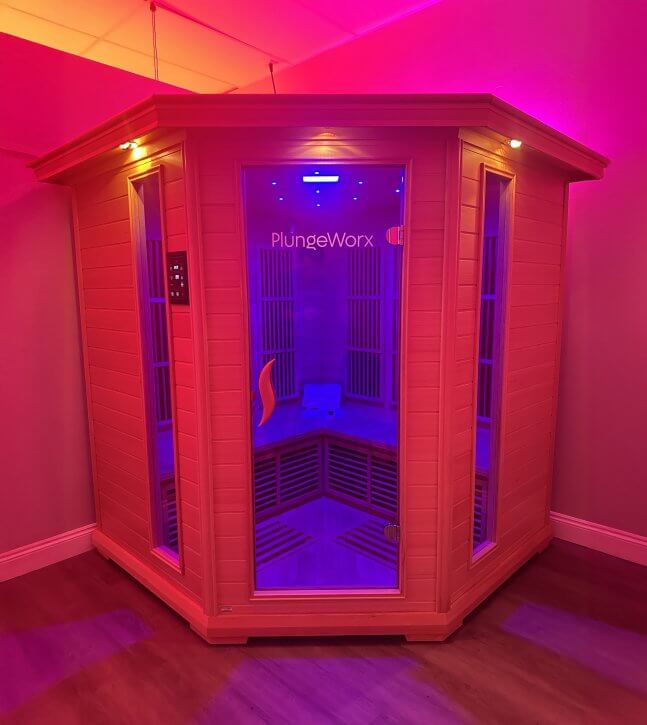
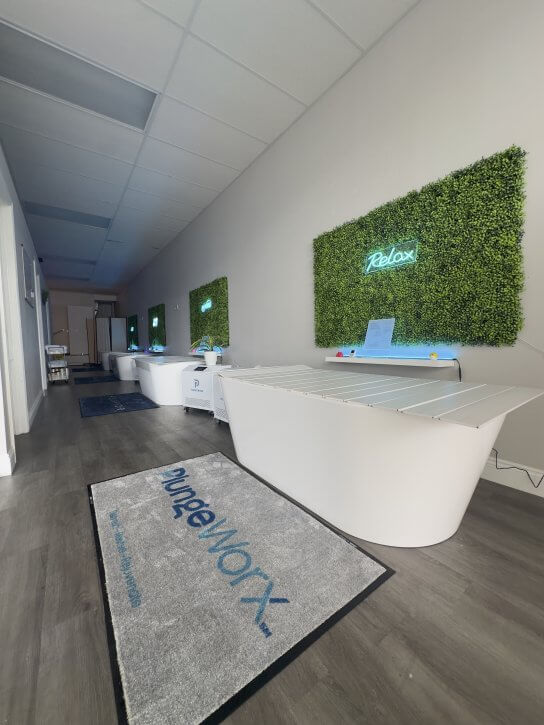
“A large part of what we do is education,” PlungeWorx Pensacola Co-Founder Jon Richmond said. “We spend a lot of time helping people understand how infrared saunas, cold plunges and contrast therapy work, how to use them safely and how to structure sessions based on individual goals whether that’s recovery, stress relief, athletic performance or overall wellness.”
On its own, an infrared sauna offers stress relief, detoxification and improved circulation by using light to heat the body directly. Infrared saunas use a range of light frequencies (wave lengths) within the invisible infrared spectrum to produce therapeutic heat. Users report better skin health, potential cardiovascular support, immune system boosts plus improved sleep and mood.
These saunas can be categorized by the specific frequencies of infrared light they use: near-infrared (NIR), mid-infrared (MIR) and far-infrared (FIR) with wave lengths ranging from 700 to 3,000 nanometers (nm). Although, most popular are full-spectrum saunas that combine all three wavelengths to offer a broader range of therapeutic benefits.
Infrared saunas operate at a lower temperature than traditional saunas with the ideal level of heat being between 130 to 140 degrees Fahrenheit. Many beginners ease into the experience with five to 15 minutes at 120 degrees Fahrenheit and build toward 20 to 45 minutes per session, aiming for sessions two to four times per week depending on if you are using the sauna to enhance general wellness, or as a method for detoxification.
Increased heart rate and blood flow from heat exposure in these saunas mimics the effects of moderate exercise, improving heart function. Although often linked to cold therapy, heat also plays a role in synapse regeneration that protects against neurodegenerative diseases like Alzheimer’s and Parkinson’s. The infrared saunas activate heat shock proteins in the body that not only protect cells but clear waste. All this to say, infrared saunas combat oxidative stress in multiple ways, making it an effective hack for longer lifespan with consistent use being key.
On the flip side, there’s cold therapy that ranges from advanced forms like cryotherapy to the straightforward method of taking a cold plunge. Cold plunges offer a more affordable entry point and involve partially or totally submerging yourself in cold water for a few minutes at a time. Gradual adaptation to coldness levels is advised and anyone can start at home by taking cold showers to acclimate to the lower temperatures. Once you’re ready to take the plunge, the best way to do this is by using a tub designed to maintain a steady temperature and to keep calm, controlled breathing throughout the experience. It’s recommended that beginners start at 50 to 55 degrees Fahrenheit for durations of one to five minutes, while more experienced users can soak in waters as low at 38 to 45 degrees Fahrenheit for longer while always monitoring how they feel. Ideally, you’ll want to commit to a maintenance routine of two to four sessions a week.
Cold therapy has potential for increasing longevity by activating the body’s cellular recycling system, clearing damaged proteins and improving cell health, while also triggering protective cellular response to improve repair and defense against damage, which slows down cellular aging.
NAD+ Therapy
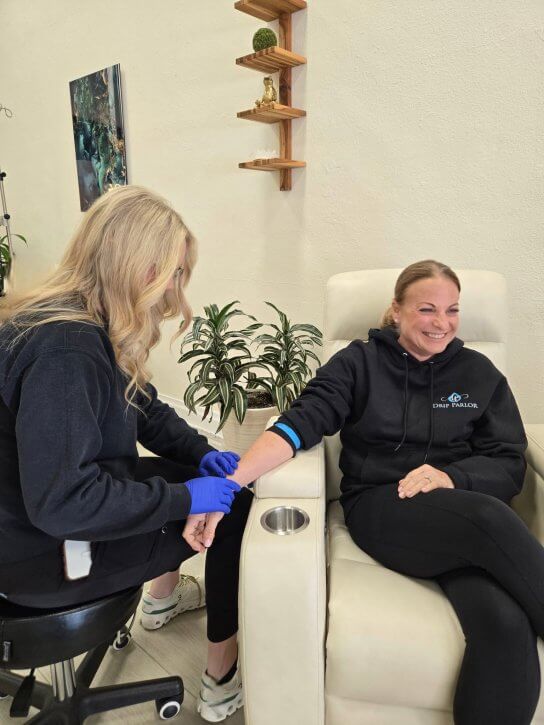
Another method for wellness enhancement is supplementing with NAD+: a vital coenzyme found in all living cells that is essential for energy production and DNA repair. Natural NAD+ levels decline with age and this decline is often linked to various age-related conditions like fatigue, cognitive decline and metabolic disorders that disrupt the body’s ability to convert food into energy because of missing enzymes, causing a build up of harmful toxins.
“NAD+ helps patients with metabolic function, mental clarity, relief from chronic pain and a ton of other things,” Drip Parlor Pensacola RNs Haley Brown and Ashley Waltz said. “After getting NAD+, patients state they have more energy, focus and feel less stress with an overall better quality of life. Who wouldn’t want that?”
Although NAD+ has grown in popularity as a pill-form supplement ranging from 50 mg to 600 mg, delivering NAD+ directly to the bloodstream and bypassing the digestive system means maximum absorption and immediate availability to cells. For this reason, IV (intravenous) therapy and IM (intramuscular) injections have become more sought-after options. To prepare for either an infusion or injection: hydrate ahead of a session, eat a healthy meal one to two hours prior, plus avoid excess alcohol and caffeine intake for 24 hours leading to the session.
NAD+ IV infusions can take four hours or eight hours depending on the dosage and individual tolerance. NAD+ injections can be great for those on time constraints, but do not offer the same higher doses as infusions. Effectiveness can vary by dosing with a full 2,000 mg IV infusion lasting up to a year depending on how the body metabolizes it, while 100 to 200 mg injections can have positive results for a week or longer. CoQ10 injections can help increase the longevity of NAD+ in the body. For optimal and long-lasting results, it is recommended to do weekly infusions then taper off to once a month for maintenance.
Under the surface, NAD+ therapy promotes cellular health and energy optimization by supporting DNA repair, cell regeneration, and ultimately, longevity. Externally, after receiving NAD+ therapy, users report better mental clarity, mood and relief from pain.
Red Light Therapy
Similar to infrared saunas, red light therapy is another method that utilizes near-infrared (NIR) along with lowlevel red light to stimulate cellular energy in mitochondria to promote healing and collagen production, reduce inflammation, improve hair and skin by enhancing blood flow and cell function. It works by stimulating cell regeneration, preventing cell death and increasing resilience against age related decline.
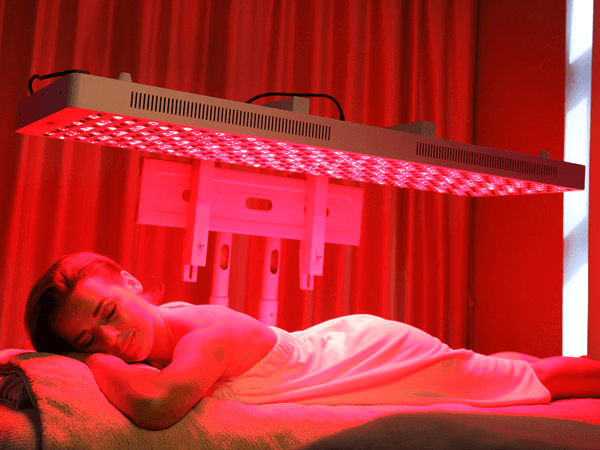
Red light therapy is non-invasive and uses LED masks or panels to direct low-levels of light to the body and penetrate skin. Using medical-grade LED panels can ensure receiving the optimal wavelength and coverage for treatment goals.
“Our red light therapy room features medical-grade LED panels designed for full-body exposure, allowing consistent and even light coverage,” Richmond, one of the co-founders of PlungeWorx Pensacola said.
For best results, a session should range from 10 to 30 minutes under frequencies ranging from 660 nm to 850 nm. It’s recommended to sit or lie down with the maximum amount of skin exposure possible, refrain from using lotions or heavy skin care, and use goggles for eye protection. To maintain the benefits of red light therapy, it is suggested to undergo therapy three to five times per week. For this approach, consistency is key because benefits cease once you stop the therapy.
On the cellular level, red light therapy utilizes near infrared light to stimulate the production of ATP, boosting cellular energy via mitochondria, which not only reduces inflammation but enhances cellular repair and protects neurons. This leads to benefits like better skin, heart function, cognitive health and muscle strength, which ultimately supports healthier aging.
Although we’ve highlighted red light therapy, infrared saunas, hyperbaric oxygen chambers, NAD+ therapy and cold plunges, these are just a few of the many ways one can choose to optimize wellness for a longer, healthier life. As with anything new, side effects are possible and best avoided by conducting research and consulting with professionals prior to use. While we explored the cellular health and longevity benefits of each wellness hack, the therapies above do possess other benefits to be explored for pain relief, performance enhancement and mental health. No matter what you choose, Pensacola Magazine wishes you a happy and healthy new chapter to 2026.